
Every year, someone declares PHP dead. Yet here we are in 2025, and PHP isn't just surviving—it's thriving. The language that powers a significant portion of the web continues to evolve, adapt, and prove its critics wrong with impressive statistics and modern capabilities.
If you've heard the "PHP is dead" narrative, you're not alone. It's been circulating since the rise of Node.js in the early 2010s and hasn't stopped since. But here's the reality: PHP powers 74.5% of all websites with a known server-side programming language. That's not the story of a dying language. That's dominance.
Let's cut through the noise and explore why PHP remains relevant, what's changed in modern PHP, and why millions of developers continue building with it in 2025.
The Numbers Don't Lie
Before we discuss features and frameworks, let's look at the data. Statistics paint a clear picture of PHP's position in the web development ecosystem.
As of April 2025, 43.4% of all websites on the internet run on WordPress, and WordPress is built entirely on PHP. That single fact alone accounts for hundreds of millions of websites. But WordPress is just one part of the story.
WordPress holds a 61.7% market share among websites using a content management system, which means when people choose a CMS, they overwhelmingly choose PHP-powered solutions. Beyond WordPress, platforms like Drupal, Joomla, and Magento all run on PHP, collectively serving millions more sites.
The developer community shows interesting patterns too. While only 18.2% of all respondents in the Stack Overflow Developer Survey 2024 reported using PHP, this lower percentage among developers compared to its overwhelming web presence reveals something important: PHP excels at what it was built to do—serve web pages efficiently at massive scale.
By the end of 2024, there were more than 1.5 million websites created with Laravel, the leading PHP framework. These aren't abandoned projects—they're active, revenue-generating applications serving millions of users daily.
Why the "PHP is Dead" Myth Persists
The disconnect between PHP's actual usage and its reputation among developers stems from several factors. Understanding these helps separate perception from reality.
Developer mindshare versus deployment reality creates the biggest gap. Discussions on Reddit, Twitter, and developer forums skew toward newer technologies and exciting trends. Developers naturally gravitate toward what's new and innovative, making JavaScript frameworks, Go microservices, and Rust applications dominant topics of conversation.
Meanwhile, PHP quietly powers billions of page views daily without requiring constant discussion. It's the reliable workhorse that doesn't generate buzz but gets the job done. This creates a visibility problem where PHP appears less relevant than it actually is.
Legacy code association damages PHP's reputation unfairly. Many developers encountered PHP through maintenance work on poorly written legacy applications from the PHP 4 and early PHP 5 era. Code written fifteen years ago, before modern frameworks and best practices emerged, often looked messy and unstructured.
Judging modern PHP by these legacy applications is like judging current JavaScript by code from the jQuery spaghetti days. The language has evolved dramatically, but first impressions stick. Developers who haven't touched PHP since 2010 often don't realize how much has changed.
The cool factor matters in developer communities. New languages and frameworks generate excitement, conference talks, and Medium articles. PHP, having been around since 1995, lacks that new technology appeal. This creates a perception problem where established technologies seem outdated compared to shinier alternatives, regardless of actual capabilities.
Job market misconceptions also play a role. While flashy startups might advertise Node.js or Go positions, thousands of companies quietly hire PHP developers for stable, well-paying jobs. The demand exists, but it doesn't make headlines like "hot new tech stack" announcements do.
What's Actually New in Modern PHP
PHP has transformed dramatically in recent years. If your mental model of PHP stopped around version 5, you'll barely recognize PHP 8 and beyond.
PHP 8: The Game Changer
PHP 8 was released on November 26, 2020, bringing revolutionary improvements that modernized the language fundamentally.
Just-In-Time Compilation represents the biggest performance leap in PHP history. The JIT compiler converts frequently executed code into machine code during runtime, dramatically improving performance for CPU-intensive operations. While traditional web applications might not see massive gains, applications involving image processing, data analysis, or complex calculations benefit significantly.
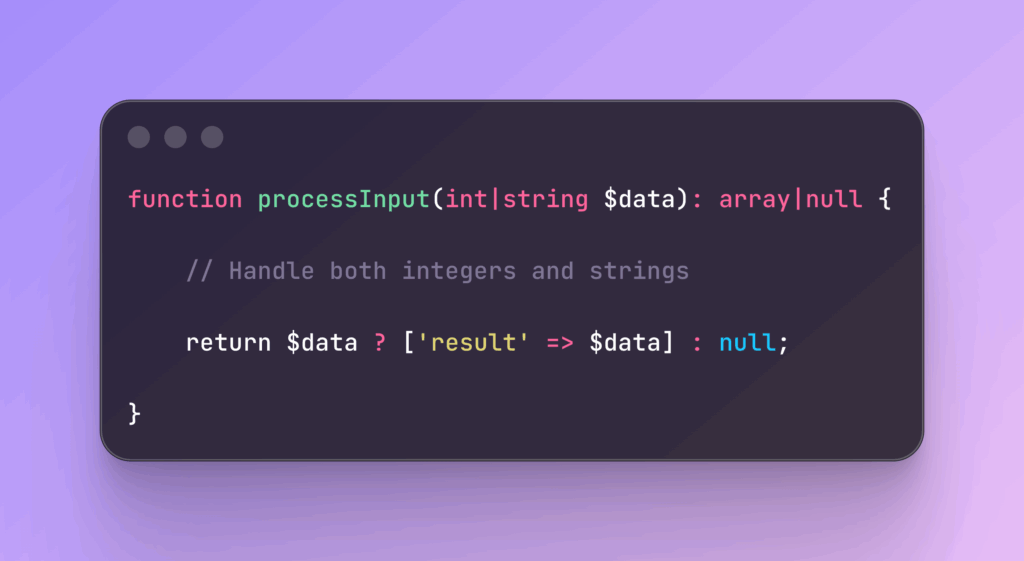
Union Types allow specifying multiple possible types for parameters and return values. Instead of choosing between strict typing and flexibility, you can now have both:
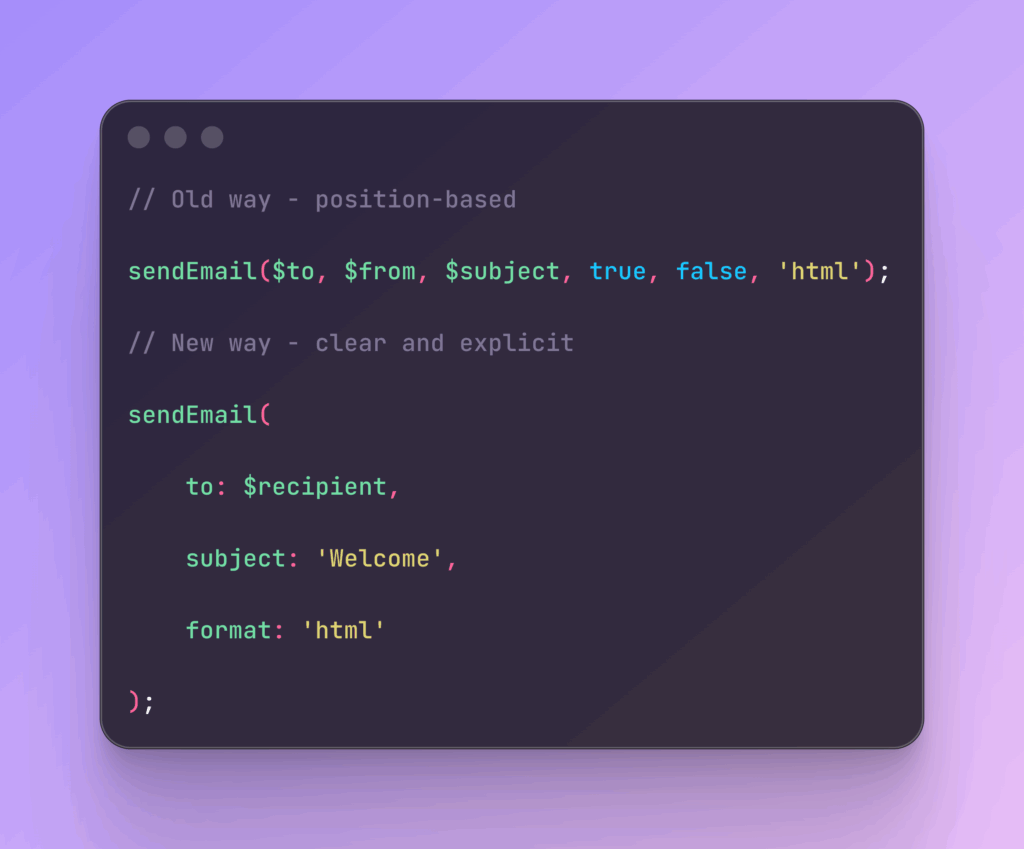
Named Arguments make function calls more readable and maintainable. You can now specify arguments by name rather than position, making code self-documenting and allowing you to skip optional parameters:
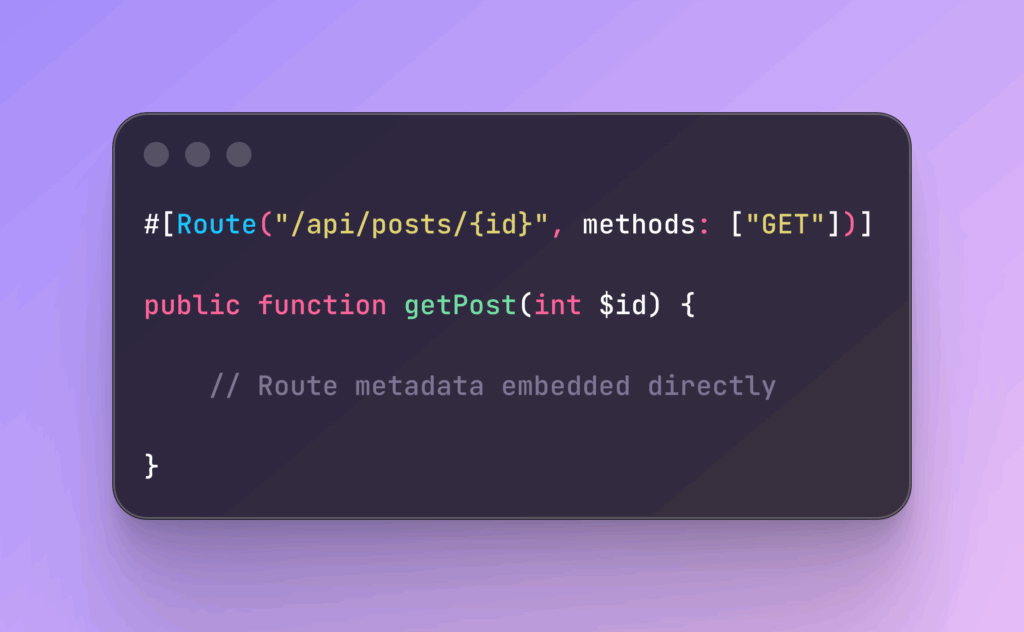
Attributes (similar to decorators in other languages) provide structured metadata for classes and methods. Instead of PHPDoc annotations, you can now use structured metadata with PHP's native syntax:
Constructor Property Promotion eliminates repetitive code when defining class properties. Previously, properties had to be repeated several times before you could use them with objects. Now you can declare and initialize properties directly in the constructor:
// Before PHP 8
class Point {
public float $x;
public float $y;
public function __construct(float $x, float $y) {
$this->x = $x;
$this->y = $y;
}
}
// PHP 8 - concise and clean
class Point {
public function __construct(
public float $x,
public float $y
) {}
}
Match Expression provides a cleaner, more powerful alternative to switch statements. Match is an expression, meaning its result can be stored in a variable or returned, and it does strict comparisons:
$result = match($status) {
'pending' => 'Awaiting approval',
'approved' => 'Processing',
'completed' => 'Done',
default => 'Unknown status'
};
Nullsafe Operator simplifies null checking in chains of method calls. Instead of null check conditions, you can now use a chain of calls with the new nullsafe operator:
// Old way - tedious null checking
$country = null;
if ($session !== null) {
$user = $session->user;
if ($user !== null) {
$address = $user->getAddress();
if ($address !== null) {
$country = $address->country;
}
}
}
// New way - clean and readable
$country = $session?->user?->getAddress()?->country;
PHP 8.5: The Latest Evolution
PHP 8.5 was released on November 20, 2025, continuing the momentum with developer-focused improvements.
The Pipe Operator transforms how we chain function calls. Instead of deeply nested function calls, you can now write clean, linear transformations:
// Before - hard to read nested calls
$output = strtolower(
str_replace(['.', '/', '…'], '',
str_replace(' ', '-',
trim($input)
)
)
);
// After - clear, readable pipeline
$output = $input
|> trim(...)
|> fn($s) => str_replace(' ', '-', $s)
|> fn($s) => str_replace(['.', '/', '…'], '', $s)
|> strtolower(...);
Clone With enables modifying object properties while cloning, simplifying immutable object patterns common in modern application design.
Native Array Functions like array_first() and array_last() eliminate common boilerplate code that developers have been writing for years.
Fatal Error Backtraces make debugging significantly easier by providing stack traces for fatal errors, something developers have wanted for decades.
These aren't minor tweaks—they're substantial improvements that bring PHP in line with or ahead of many modern languages in terms of developer experience and performance.
The Laravel Effect: PHP's Renaissance
Laravel has been to PHP what Rails was to Ruby—a transformation catalyst that makes development enjoyable and productive. As of 2025, Laravel has over 2.5 million sites running on it, and its influence extends far beyond those numbers.
Elegant Syntax and Modern Patterns
Laravel introduced clean, expressive syntax that makes PHP code genuinely pleasant to write and read. The framework embraces modern development patterns like dependency injection, service containers, and event-driven architecture while keeping them accessible.
Where older PHP frameworks felt clunky and verbose, Laravel feels refined. Simple tasks require minimal code, while complex operations have well-thought-out abstractions. This balance attracts developers who might otherwise dismiss PHP entirely.
Comprehensive Ecosystem
Laravel isn't just a framework—it's a complete ecosystem. Laravel Forge handles server provisioning and deployment. Laravel Vapor enables serverless deployment on AWS. Laravel Nova provides an elegant administration panel. Laravel Horizon manages queue monitoring. These tools eliminate infrastructure headaches and let developers focus on building features.
About 40% of startups operating in tech and digital fields opted for Laravel, choosing it because of its modern tools and swift development process. This adoption among startups demonstrates Laravel's alignment with modern development needs.
Performance Improvements
Modern Laravel addresses performance concerns head-on. Laravel Octane runs applications using high-performance servers like Swoole and RoadRunner, dramatically improving throughput and reducing response times. Octane-based applications have shown 2x to 3x faster request throughput compared to standard Laravel setups.
Real-World Applications
Laravel powers serious, production applications across industries:
- E-commerce platforms processing millions of dollars in transactions daily
- SaaS applications handling complex subscription billing and user management
- Enterprise CRMs managing vast customer databases and workflows
- Healthcare systems with strict security and compliance requirements
- Financial technology platforms requiring reliability and auditability
These aren't hobby projects or prototypes. They're revenue-generating businesses trusting PHP and Laravel with their core operations.
PHP in Different Industries
Understanding where PHP excels helps explain its continued relevance. Different industries have discovered PHP's particular strengths.
Content Management and Publishing
WordPress dominates the CMS market for good reasons. PHP's simple deployment model, vast hosting availability, and extensive plugin ecosystem make it ideal for content-driven sites. Publishers need content management, not cutting-edge microservices architecture, and PHP delivers exactly that.
Major media companies, universities, corporations, and government agencies run their primary web presence on PHP. When BBC, CNN, or The New York Times need content management, they're not concerned about whether PHP is "cool"—they need reliability and a mature ecosystem.
E-Commerce
Magento, WooCommerce, and Shopify (originally PHP-based) demonstrate PHP's e-commerce strength. These platforms process billions in transactions annually, handling complex product catalogs, payment processing, inventory management, and customer accounts.
E-commerce requires maturity and stability. Cart abandonment during checkout due to bugs costs real money. Payment processing errors create legal liability. PHP's proven reliability makes it a safe choice for applications where downtime equals revenue loss.
Enterprise Applications
Large organizations appreciate PHP's predictability and extensive talent pool. When you need to maintain an application for 10+ years and ensure you can always find developers, PHP provides safety. The language evolves carefully, maintaining backward compatibility and providing long-term support.
Banks, insurance companies, and healthcare organizations run critical internal systems on PHP. These industries prioritize stability and compliance over technological novelty, and PHP delivers both.
SaaS Platforms
Modern SaaS applications increasingly choose Laravel for rapid development and scalability. The framework handles authentication, authorization, subscription billing, API development, and real-time features out of the box.
Startups need to validate ideas quickly, and Laravel enables building MVP products faster than most alternatives. Once validated, the same codebase scales to thousands of users without architectural rewrites.
The Practical Advantages
Beyond specific features and frameworks, PHP offers practical benefits that matter in real-world development.
Deployment Simplicity
PHP's shared hosting compatibility remains unmatched. Upload files via FTP, and they work. No build steps, no compilation, no complex deployment pipelines required for basic applications. While modern apps often use more sophisticated deployment, this simplicity option exists when you need it.
Contrast this with Node.js requiring forever, PM2, or similar process managers. Or Go requiring executable compilation and distribution. PHP's model—where files simply execute when requested—eliminates entire categories of deployment complexity.
Hosting Availability and Cost
Virtually every hosting provider supports PHP. From $5/month shared hosting to enterprise cloud platforms, PHP works everywhere. This ubiquity creates competitive hosting markets, driving down costs.
Try finding $5/month Node.js or Go hosting with equivalent features. The PHP hosting ecosystem's maturity translates to better value and more options.
Gradual Learning Curve
PHP allows beginners to see results quickly while providing depth for experts. You can mix PHP into HTML and see immediate results, then gradually adopt better practices, frameworks, and design patterns as skills develop.
This accessibility explains why PHP remains popular for teaching web development. Students can build working web applications from day one, maintaining motivation while learning programming fundamentals.
Massive Talent Pool
Millions of developers know PHP. When hiring, you'll receive many qualified applicants. When seeking help, Stack Overflow has answers. When evaluating candidates, you can find various skill levels at different price points.
Contrast this with newer languages where senior developers are scarce and expensive. PHP's large talent pool provides hiring flexibility and knowledge transfer ease.
What PHP Does Best
Every technology has sweet spots. PHP excels in specific scenarios where its characteristics align perfectly with requirements.
Content-Heavy Websites: When your primary need is displaying content—blogs, news sites, documentation, marketing pages—PHP with WordPress or similar CMS provides unbeatable time-to-value.
CRUD Applications: Applications primarily creating, reading, updating, and deleting database records represent PHP's bread and butter. Laravel makes building these applications remarkably fast.
Rapid Prototyping: When you need to validate an idea quickly, PHP enables building working prototypes in hours or days. The quick feedback loop accelerates learning and iteration.
Monolithic Applications: While microservices dominate discussions, many applications work better as well-architected monoliths. PHP excels at building monolithic applications that remain maintainable as they grow.
Long-Running Projects: Applications maintained for years or decades benefit from PHP's stability and backward compatibility. You won't face "rewrite in the new version" scenarios every two years.
The Real Competition
PHP doesn't compete directly with every technology. Understanding actual alternatives helps clarify PHP's position.
Node.js competes for real-time applications and JavaScript full-stack scenarios. If you need WebSockets, server-sent events, or heavy client-server bidirectional communication, Node.js might fit better. But for traditional request-response web applications, PHP often proves simpler and more efficient.
Python with Django/Flask competes for data-heavy applications and machine learning integration. If your application revolves around data science, Python provides better libraries. For traditional web applications, PHP and Python are roughly equivalent, with preference depending on ecosystem familiarity.
Ruby on Rails once competed heavily but has declined in market share. Rails pioneered many patterns Laravel adopted, but Laravel's performance improvements and PHP's hosting ubiquity now give Laravel advantages for many use cases.
Go competes for performance-critical microservices and systems programming. If you're building infrastructure or need extreme performance, Go wins. For business applications and web services, PHP provides better development speed and ecosystem maturity.
Java with Spring competes in enterprise environments. Java offers better performance and more mature enterprise patterns, but requires more boilerplate and slower development cycles. Choose based on whether you prioritize development speed or raw performance.
Addressing the Criticisms
Let's honestly address common PHP criticisms and evaluate their validity in 2025.
"PHP is inconsistent and poorly designed"
Early PHP had design inconsistencies—function naming conventions varied, parameter orders differed, and type handling was unpredictable. Modern PHP has addressed many issues through consistent APIs, type declarations, and deprecation of problematic features.
While you can still find inconsistencies in legacy functions, new code using modern PHP 8+ features follows consistent patterns. Most criticisms target historical problems that no longer affect new development.
"PHP is insecure"
PHP itself isn't insecure—poorly written PHP applications are insecure, just like poorly written applications in any language. Modern PHP frameworks like Laravel include security features by default: CSRF protection, SQL injection prevention, XSS filtering, and secure session handling.
The security reputation largely stems from legacy applications and beginner tutorials that taught bad practices. Professional PHP development in 2025 produces secure applications when following established best practices.
"PHP is slow"
PHP 7 brought massive performance improvements, and PHP 8's JIT compiler continued that trend. Modern PHP performs competitively with most interpreted languages and sometimes approaches compiled language speeds for certain workloads.
More importantly, most web applications are I/O bound, not CPU bound. Database queries, API calls, and file operations dominate response times. PHP's performance suffices for the vast majority of web applications.
"Nobody uses PHP anymore"
This criticism contradicts easily verifiable facts. The statistics we discussed earlier prove PHP's widespread use. This criticism often comes from developers in echo chambers where everyone uses the same stack and assumes their experience represents the entire industry.
Getting Started with Modern PHP
If you're convinced PHP deserves a second look, here's how to begin with modern best practices from day one.
Installation and Setup
Install PHP 8.2 or later—don't settle for older versions. Use Composer, PHP's dependency manager, for package management. Set up a development environment using tools like Laravel Valet, Docker, or Laravel Homestead.
Avoid XAMPP or WAMP for serious development. They work for absolute beginners but don't reflect modern workflows. Learn proper local development environments from the start.
Learn Modern PHP First
Don't start with WordPress tutorials from 2015. Learn PHP 8 features, type declarations, and modern syntax. Understand namespaces, autoloading, and Composer before diving into frameworks.
Resources like PHP The Right Way provide excellent guidance on modern practices. Ignore tutorials that don't use type declarations or still use mysql_ functions—they're teaching outdated approaches.
Choose Your Framework Path
For full applications, start with Laravel. The documentation is excellent, the community is massive, and you'll learn modern patterns that transfer to other frameworks and languages.
For APIs, consider Laravel or Symfony. For microservices, explore Slim or Lumen. For legacy maintenance, learn the specific framework the application uses.
Master the Ecosystem
Learn Composer for dependency management. Understand PSR standards for PHP interoperability. Use PHPUnit for testing. Explore tools like PHP CS Fixer for code style and PHPStan for static analysis.
Modern PHP development involves more than just the language—it's about the tooling ecosystem that ensures code quality and maintainability.
Build Real Projects
Theory only goes so far. Build actual applications: a blog with authentication, a REST API with JWT authentication, a real-time chat application, or an e-commerce platform. Each project teaches different aspects of modern PHP development.
Deploy these projects to production. Experience real hosting, deal with performance issues, implement monitoring. This practical experience proves invaluable when evaluating whether PHP fits your needs.
The Future of PHP
PHP's future looks stable and promising. The language continues evolving with regular annual releases adding features and performance improvements. The community remains active, with major frameworks and libraries receiving consistent updates.
Continued Modernization: PHP's development team focuses on performance, developer experience, and type safety. Future versions will likely bring more static analysis capabilities, better async support, and continued performance gains.
Framework Evolution: Laravel leads PHP's modernization, but Symfony, CakePHP, and others also innovate. Competition between frameworks drives improvements benefiting the entire ecosystem.
Cloud and Containers: PHP adapts well to containerized deployments. Docker images, Kubernetes support, and cloud-native tools continue improving, making PHP suitable for modern infrastructure.
Long-Term Stability: Unlike some newer languages that might radically change direction, PHP's governance ensures stability. Applications written today will likely run with minimal changes on PHP versions released five or ten years from now.
The Bottom Line
Is PHP dead? Absolutely not. It's alive, actively developed, and powering a significant portion of the internet. The "PHP is dead" narrative reflects perception gaps, not reality.
PHP may not generate as much hype as newer languages, but it delivers reliable, fast, and maintainable applications when used with modern tools and practices. It provides excellent job opportunities, abundant learning resources, and proven scalability.
Should you learn PHP in 2025? If you're building web applications, particularly content-driven sites, traditional web apps, or rapid prototypes, PHP remains an excellent choice. The combination of modern language features, mature frameworks like Laravel, and vast ecosystem resources makes PHP a pragmatic option.
Should you stick with PHP if you already know it? Absolutely, while staying current with modern features and best practices. Your PHP skills remain valuable and marketable.
PHP isn't dead—it's evolved. The language that powered the early web has matured into a modern, capable platform for building diverse applications. Those who dismiss it miss opportunities to leverage a proven, practical technology that simply works.